Safety in the MRI Room: Strong Field and Noise
Two things decide safety in the MRI room, and both set it apart from an ordinary diagnostic room: a very strong magnetic field and considerable noise during the scan. Both call for rules you will not know from other medical settings. What makes an MRI room different from other places where imaging is done? Above all, the scanner's magnet, which acts there without a break.
Why the Magnetic Field in the MRI Room Matters So Much
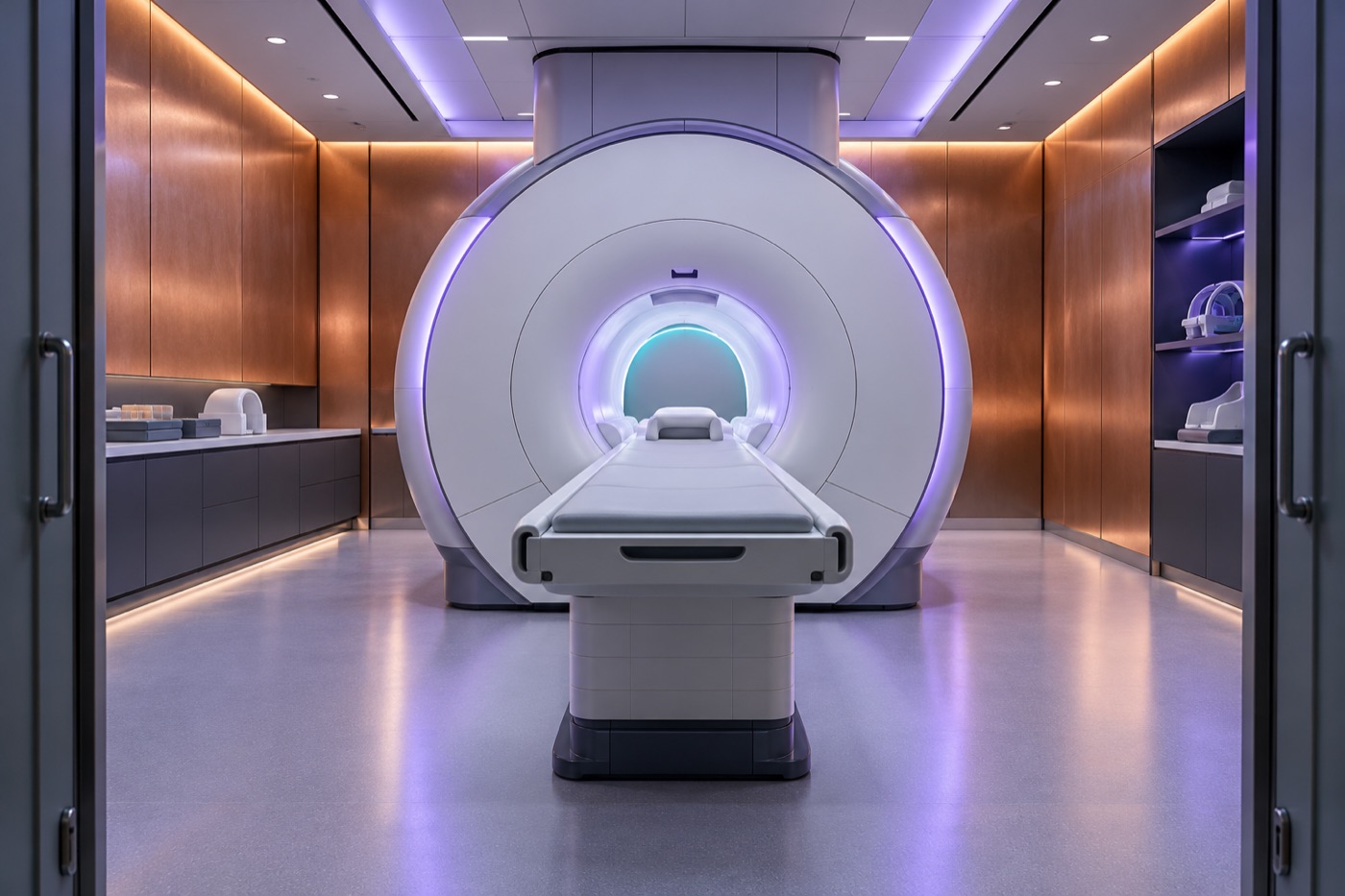
The scanner's magnet is switched on all the time, even when nobody is being examined. Its field is very strong and gets stronger the closer you come to the machine. Safety in the MRI room therefore does not depend on whether the scanner is measuring at that moment. The rules apply at all times, and the room is treated as an area where the magnetic field is always present.
This has practical consequences: the closer you get to the scanner, the stronger the field acts. That is why staff pay attention to who enters the room and what they bring with them. These rules are not excessive caution. They follow from the physical properties of a field that does not go away when the exam ends.
Metal Objects: Why Strict Rules Apply
Strong forces of attraction can act on metal objects. For this reason there are strict rules about which items may be brought in. Staff watch for metal objects in particular. Something that is harmless in an ordinary setting can behave quite differently near the scanner than you would expect.
These rules apply to everyone who enters the room, not only to the person being examined. In practice that means the facility's staff decide what may be taken in. Your own judgment is not what counts here. This text does not list permitted items, because such decisions rest with the people responsible for the room.
Hearing Protection: Where Does the Noise Come From?
While it runs, the scanner can be very loud. The sound level can reach around 110 decibels. For this reason, people in the room wear hearing protection. This is the second feature that marks this place out: sound is not a side issue of the exam here, and it requires protection of its own.
Everyone who is in the room while the scanner operates must wear hearing protection. That way even the loud noise need not be a problem, as long as the recommended measures are followed. Details, such as the type of hearing protection, are set by the facility itself.
Implants and Instructions From Staff
Implants, for example pacemakers, need special assessment. They call for an individual check. What counts here is the manufacturer's information on the conditions for use in an MRI. This text makes no decision for any individual case, because every case has to be checked separately against the documents by people authorized to do so.
Instructions from staff must always be followed. This article is popular science and does not replace those instructions. If you have questions about your own exam, ask the facility's staff before you enter the room.
Summary
Two features of the scanner are decisive for safety in the MRI room: the permanently acting, strong magnetic field and the noise, which can reach about 110 decibels. From them follow strict rules for metal objects, the requirement to wear hearing protection and the individual assessment of implants. You will find more popular science articles on imaging on the other pages of Spinschicht.